Townhouse & Condo Water Damage in Columbia, MD
In a townhome row or a garden condo, water does not respect property lines. The restoration team traces it across the shared wall or down from the unit above, dries both sides and keeps a record each household can use.
(888) 535-8182Call about the Columbia townhouse leak- Both units mapped
- Thermal imaging through party walls
- Separate photo logs
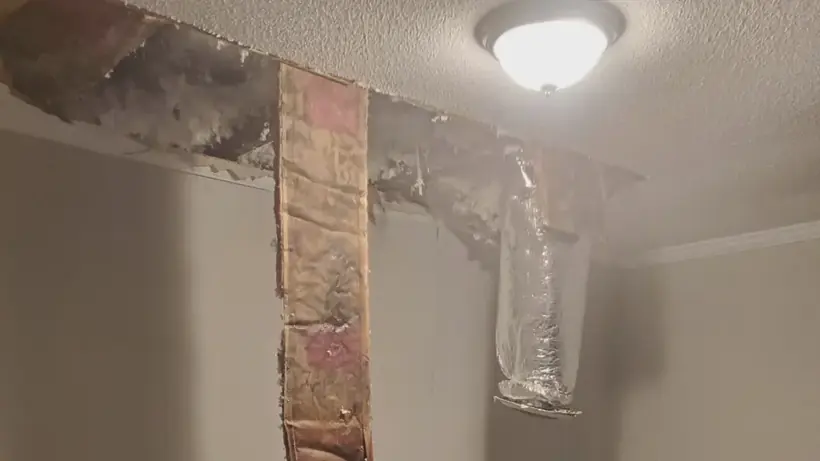
What to do the moment you find water from a neighbor's unit
- Step 1Knock on the neighbor's door
If the water is coming from next door or above, the fastest fix is someone closing a valve on their side.
- Step 2Close your own shutoff if the source is yours
Check your water heater, washer and bathrooms first.
- Step 3Tell the association if there is one
Condo and some townhome associations handle common pipes, roofs and exterior walls.
- Step 4Photograph your side
Record every stain, drip and wet floor with dates, because two policies may be involved.
Columbia has a lot of attached housing. Townhome rows line the cul-de-sacs of nearly every village, and garden condos and apartment buildings cluster near the village centers and Town Center. Shared walls and stacked floors change how a water loss behaves and who deals with it.
What does townhouse & condo water damage cost in Columbia, MD?
In Columbia, MD, townhouse and condo water damage cleanup typically runs $1,200 to $3,500 for one room on one side of a wall and $3,500 to $9,000 when both units or two floors are wet. Water category, square footage, material class and how fast drying started drive the cost, and each household's share depends on the source.
- Leak from above or next door
- Ceiling or wall dried in place
- Readings for both owners
- Party wall cavity drying
- Carpet and pad on both sides
- Separate documentation
- Condo above and below
- Ceilings opened to drain
- Association common areas
The drivers are the water category, the square footage, the material class and how fast drying started. For a planning range, try the water damage cost calculator.
How townhouse and condo water damage is handled in Columbia
- 1
Trace the source
The tech who does the walkthrough uses thermal imaging and meters to follow the water through the shared wall or ceiling to its source.
- 2
Extract on every side
The extraction crew removes water in each affected unit, not just the one that called.
- 3
Dry the shared cavity
The drying team dries the party wall or ceiling cavity with directed air and LGR dehumidifiers.
- 4
Document for each owner
The restoration team keeps a moisture map and photo log that each household and the association can use.
The standard behind townhouse and condo water damage
Set by the source unit, usually Category 1 or 2
Class 2 when a wall or ceiling cavity is wet
Thermal imaging, extraction, cavity drying, LGR dehumidifiers
Framing on both sides within 2 to 4 points of dry
How water crosses between units
- A washer, water heater or toilet supply fails in one unit and the water runs under the shared wall.
- A bathroom or kitchen leak in the condo above comes through the ceiling below.
- A pipe inside the party wall serves one unit but floods both.
- A roof, gutter or balcony drain failure on a shared building lets rain into the top units.
Because the source may sit on the other side of the wall, the restoration team maps moisture on both sides and records where the water started. That matters when two insurance policies and an association policy each cover a different part.
Drying a party wall
Party walls between townhomes are often built as two layers of drywall with a fire-rated cavity between them. The drying team dries each side from its own unit, reads the framing through both faces, and avoids opening a fire-rated assembly more than the readings require. Ceilings between stacked condos are dried from below, with small drain holes when water is pooling on the drywall.
Paperwork for two households
Each owner gets the same facts: the moisture map from the first visit, daily readings, and dated photos of both sides taken before anything is removed. The Ready.gov flood page covers basic safety, and EPA WaterSense has leak checks every unit owner can run. Related pages: ceiling leak water damage and washer and appliance leak cleanup.
Related water damage services in Columbia
Columbia and Howard County
The Columbia restoration crew covers all ten Columbia villages, from Wilde Lake and Town Center to Long Reach, Owen Brown, Kings Contrivance and River Hill, with Ellicott City, Elkridge, Clarksville and Fulton close by.
Every village and ZIP coveredTownhouse and condo water damage questions in Columbia
Who pays when water comes from my neighbor's townhouse?
It usually depends on where the water started and what each policy and the association documents say. The moisture map and photos showing the source help each insurer sort it out. Coverage depends on your policy, so it is worth checking with your own insurer.
Can the restoration team dry both units?
Yes, with each owner's permission. Drying only one side of a wet party wall leaves the cavity wet, so both sides are usually dried at the same time.
Does the condo association handle ceiling leaks?
Associations often handle common pipes, roofs and exterior walls, while owners handle their own fixtures and finishes. Check your association documents and tell the manager early.
Will the shared wall have to be opened?
Not always. Party walls are often dried from each side through small openings. The team avoids opening fire-rated assemblies more than the readings require.
How long does drying take in a townhouse?
A contained loss usually dries in three to five days. Party walls and ceilings between stacked units can take longer.
What should I photograph for my claim?
Every stain, drip and wet floor on your side, with dates, plus the source if you can see it. Keep copies of any messages with the neighbor or the association.
Water coming through a shared wall or from the unit above?
(888) 535-8182Call about the shared-wall leakLeak from next door or upstairs? Call now.
The restoration team traces the water to its source, dries both sides of the wall and keeps a record each household can use.