Sump Pump Failure Cleanup in Columbia, MD
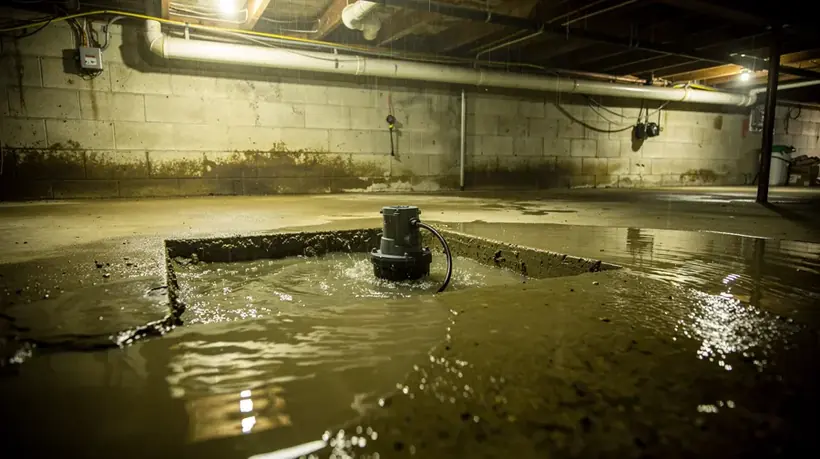
A sump pump usually fails on the worst night of the year: a summer cloudburst, a power outage, a stuck float. The extraction crew pulls the water out and the drying team handles the finished rooms around the pit.
(888) 535-8182Call about the failed Columbia sump pump- Truck-mounted extraction
- Category checked at the source
- Daily moisture readings
What to do the moment you find a failed sump pump
- Step 1Check the power first
A tripped breaker or a power outage is the most common cause. Do not touch the pump or cord while standing in water.
- Step 2Keep water off the floor above
Stop running the washer, dishwasher and showers so less water drains toward the pit.
- Step 3Lift what matters
Move boxes, electronics and furniture legs out of the water or onto blocks.
- Step 4Photograph the pit and the room
Take photos of the pump, the pit and the water in the room before cleanup starts.
Many Columbia homes on sloped lots have a sump pit in the lower level to keep groundwater below the slab. The pump runs quietly for years, so nobody notices it is tired until the night it cannot keep up.
What does sump pump failure cleanup cost in Columbia, MD?
In Columbia, MD, sump pump failure cleanup typically runs $1,200 to $3,500 when water stays in an unfinished area and $3,500 to $9,000 when it reaches finished rooms. Category, square footage, material class and how fast drying started drive the cost; the pump repair itself is separate.
- Concrete floor around the pit
- Extraction and drying
- Stored items moved and dried
- Carpet and pad lifted or removed
- Flood cuts where walls read wet
- Air movers and dehumidifiers
- Category 3 conditions
- Porous materials removed
- Antimicrobial and containment
The drivers are the water category, the square footage, the material class and how fast drying started. For a planning range, try the water damage cost calculator.
How sump pump failure cleanup is handled in Columbia
- 1
Confirm the water has stopped rising
The response team checks whether the pit is still filling and whether a temporary pump is needed to keep up.
- 2
Extract
The extraction crew removes standing water from the pit area and every room it reached.
- 3
Sort the materials
The mitigation team removes porous materials that sat in dirty water and keeps what can be dried.
- 4
Dry and verify
The drying team runs air movers and LGR dehumidifiers and logs readings until the room matches a dry reference.
The standard behind sump pump failure cleanup
Category 2 when caught early, Category 3 once it sits
Class 2 or 3 when finished rooms are reached
Extraction, air movers, LGR dehumidifiers, moisture meters
Slab-side framing within 2 to 4 points of a dry reference
Why sump pumps fail in Howard County
- Power outages during summer thunderstorms, exactly when the pit fills fastest.
- A float switch that sticks against the pit wall or the discharge pipe.
- An older pump that burns out after years of cycling.
- A frozen or clogged discharge line in January.
- A pump sized for normal rain, overwhelmed by a cloudburst.
The Ready.gov power outage page is a good reminder that a battery backup matters most in the storms that knock out power. The National Weather Service thunderstorm safety page covers the storms themselves.
What the water is carrying
Sump water starts as groundwater, but it picks up soil and whatever sits on the basement floor. Water that stands for a day or more is treated as Category 3 under the IICRC S500 standard, which means carpet pad and porous materials in its path are removed rather than dried. Water caught quickly on a sealed floor is usually handled as Category 2.
Drying the rooms around the pit
The pit usually sits in an unfinished utility room, but the water runs under the wall into the finished family room next door. The drying team reads the bottom plates and the drywall on both sides of that wall, because that is where water hides. Related pages: finished basement flooding cleanup and storm and flash flood cleanup.
Related water damage services in Columbia
Columbia and Howard County
The Columbia restoration crew covers all ten Columbia villages, from Wilde Lake and Town Center to Long Reach, Owen Brown, Kings Contrivance and River Hill, with Ellicott City, Elkridge, Clarksville and Fulton close by.
Every village and ZIP coveredSump pump failure questions in Columbia
What should I do first when the sump pump stops?
Check whether the breaker tripped or the power is out, without touching the pump or cord while standing in water. Stop using water upstairs, lift what you can, and call to get extraction started.
Is water from a sump pit clean?
It starts as groundwater but picks up soil and debris. Water that has stood for a day or more is treated as Category 3, so porous materials it soaked are removed.
Can the restoration team fix the pump?
The restoration team handles extraction and drying. Replacing or upgrading the pump is plumbing work, and many homeowners add a battery backup at the same time.
Does homeowners insurance cover sump pump overflow?
Many policies exclude it unless a water backup endorsement was added. Coverage depends on your policy, so it is worth checking with your own insurer. The drying log and photos help either way.
How long does the basement take to dry after a pump failure?
A contained loss usually dries in three to five days after extraction. Concrete and thick framing near the pit can take longer.
How can I prevent the next failure?
Test the pump by pouring water into the pit a few times a year, keep the float clear, add a battery backup, and make sure the discharge line drains well away from the foundation.
Sump pit overflowing in a Columbia basement?
(888) 535-8182Call about the sump overflowSump pump quit in Columbia? Call now.
The extraction crew pulls the water, the drying team dries the rooms around the pit, and the log goes into the claim file.