Sewage Backup Cleanup in Columbia, MD
Sewage is Category 3 water the moment it comes up a floor drain or toilet. The mitigation team contains the area, removes what it soaked and treats every surface before any drying starts.
(888) 535-8182Call for Columbia sewage backup cleanup- Containment and HEPA air scrubbers
- EPA-registered antimicrobial
- PPE on every entry
What to do the moment you find a sewage backup
- Step 1Stop using water
No flushing, laundry, showers or dishwasher until the backup is cleared. Every gallon upstairs ends up in the basement.
- Step 2Keep people and pets out
Close the door to the affected area and keep children and pets away from the water.
- Step 3Do not run the HVAC fan
If the air handler sits in the affected room, switch the system fan off so it does not pull contaminated air through the house.
- Step 4Photograph from a distance
Take photos without walking through the water. Leave cleanup to people in protective gear.
Most Columbia sewer backups come up through the lowest drain in the house, usually a basement floor drain, a lower-level shower or a toilet. The cause is often in the private sewer lateral between the house and the public main.
What does sewage backup cleanup cost in Columbia, MD?
In Columbia, MD, sewage backup cleanup typically runs $2,000 to $5,000 for a small area caught early and $5,000 to $15,000 or more for a finished basement with carpet and drywall. Category 3 water always costs more because porous materials are removed and every surface is treated.
- Floor drain or toilet backup
- Extraction and antimicrobial
- Limited material removal
- Carpet, pad and wall base removed
- Containment and HEPA scrubbers
- Structural drying after cleaning
- Several rooms or deep water
- Contents cleaning or disposal
- Extended drying and testing
The drivers are the water category, the square footage, the material class and how fast drying started. For a planning range, try the water damage cost calculator.
How sewage backup cleanup is handled in Columbia
- 1
Contain
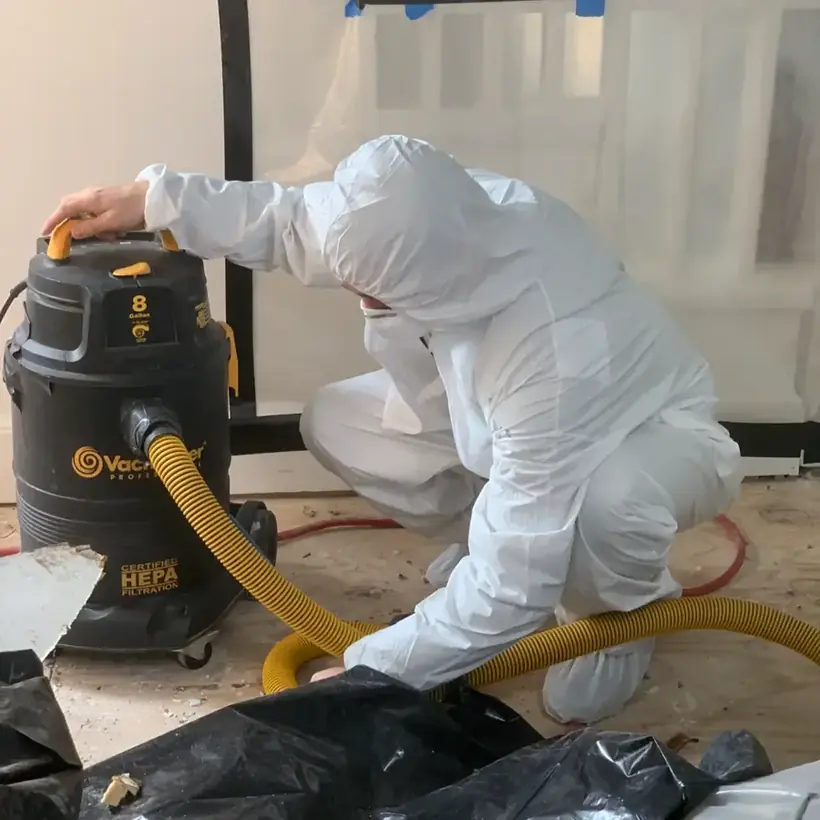
The mitigation team sets up containment and HEPA air scrubbers so contaminated air stays in the work area.
- 2
Remove
The crew extracts the sewage and removes carpet, pad, drywall and insulation that the water touched.
- 3
Clean and treat
Every remaining surface is cleaned and treated with an EPA-registered antimicrobial left on for its full dwell time.
- 4
Dry and verify
The drying team dries the structure and records readings until it matches a dry reference.
The standard behind sewage backup cleanup
Category 3 from the first minute, no exceptions
Set after removal, based on what remains wet
Containment, HEPA air scrubbers, extraction, PPE
Cleaned framing within 2 to 4 points of a dry reference
Why Columbia laterals back up
- Roots from the mature trees that line so many village streets and cul-de-sacs work into lateral joints.
- Grease, wipes and paper build up in older pipe runs.
- Heavy rain can surcharge sewer systems and push water back toward the lowest fixture.
- A collapsed or offset section of pipe under the yard or driveway.
The EPA page on sanitary sewer overflows explains how backups happen, and Howard County Public Works handles the public side of the system.
Why porous materials come out
Under the IICRC S500 standard, sewage is Category 3 the moment it happens. Carpet, pad, drywall, insulation and upholstered furniture that absorbed it cannot be cleaned to a safe condition, so the crew removes them. Concrete, tile, studs and other non-porous or semi-porous surfaces are cleaned, treated with an EPA-registered antimicrobial at its labeled dwell time, and then dried.
Protective gear and containment
Anyone entering a sewage loss wears gloves, boots, eye protection and a respirator at minimum. Containment walls and HEPA air scrubbers keep the rest of the house clean while the work happens. Once the space is clean, drying follows the same rules as structural drying. If the backup reached finished rooms, see finished basement flooding cleanup.
Related water damage services in Columbia
Columbia and Howard County
The Columbia restoration crew covers all ten Columbia villages, from Wilde Lake and Town Center to Long Reach, Owen Brown, Kings Contrivance and River Hill, with Ellicott City, Elkridge, Clarksville and Fulton close by.
Every village and ZIP coveredSewage backup cleanup questions in Columbia
Is it safe to clean up a small sewage backup myself?
Sewage carries bacteria and viruses, so even a small backup calls for gloves, boots, eye protection and a respirator. Porous materials it soaked should be removed, not washed. For anything beyond a hard-floor puddle, professional cleanup is the safer choice.
Why does the carpet have to go?
Carpet and pad absorb Category 3 water and cannot be cleaned to a safe condition. The IICRC S500 standard calls for removing porous materials touched by sewage.
Who fixes the cause of the backup?
A plumber or drain specialist clears or repairs the lateral. If the public main is involved, Howard County Public Works handles the public side. The restoration team handles cleanup and drying.
Does homeowners insurance cover sewer backup?
Many policies need a separate water backup endorsement for it. Coverage depends on your policy, so it is worth checking with your own insurer. Photos and the cleanup log help the claim either way.
Is it safe to stay in the house during cleanup?
Usually, when the affected area is contained and the HVAC is not pulling air from it. Keep children, pets and anyone with health concerns away from the work area.
How long does sewage cleanup take?
Removal and treatment usually take a day or two, then drying runs three to five days depending on what remained wet. Equipment leaves when the readings say dry.
Sewage coming up a floor drain or toilet in Columbia?
(888) 535-8182Call for the sewage cleanupSewage in the basement? Call for Columbia sewage backup cleanup.
The mitigation team contains it, removes what it soaked, treats every surface and dries the structure to the IICRC S500 standard.