Burst Pipe Cleanup in Columbia, MD
A pressurized supply pipe does not drip, it floods. The extraction crew pulls the water out of floors and cavities, and the drying team dries the walls the pipe runs through instead of guessing.
(888) 535-8182Start the Columbia burst pipe cleanup- Truck-mounted extraction
- Thermal imaging inside walls
- IICRC S500 drying standard
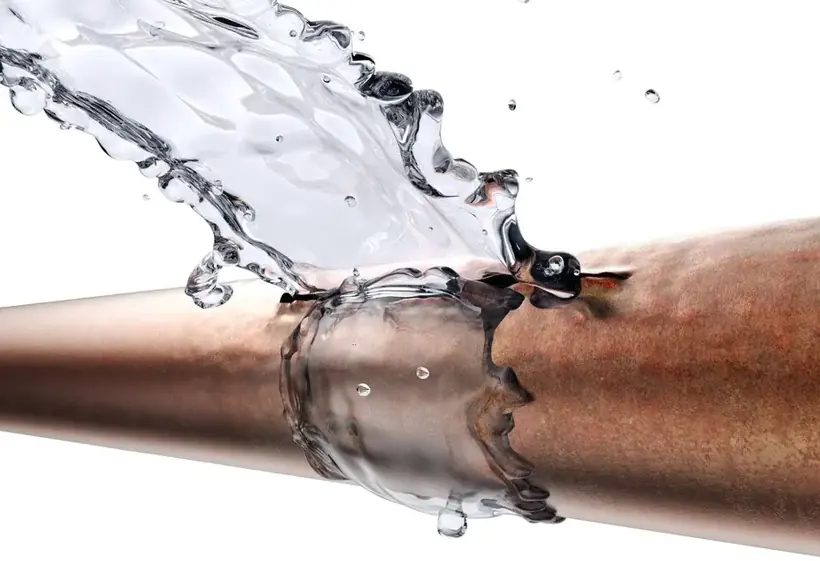
What to do the moment you find a burst pipe
- Step 1Close the main shutoff
In most Columbia homes it sits where the water service enters the basement, the utility room or a crawl space.
- Step 2Open a faucet on the lowest level
Draining the lines takes pressure off the break and slows the spray.
- Step 3Cut power to wet rooms
Switch off those breakers at a dry panel. Stay out of water near outlets.
- Step 4Photograph the break
Take photos of the pipe, the ceiling and the floor before anything is moved or opened.
Burst pipes in Columbia usually come from three places: copper that pinholes and finally splits with age, fittings and valves that fail, and pipes in exterior walls or garages that freeze in a January cold snap. Frozen pipes have their own page on frozen pipe cleanup.
What does burst pipe cleanup cost in Columbia, MD?
In Columbia, MD, burst pipe cleanup typically runs $1,000 to $3,500 when it is caught quickly in one or two rooms and $3,500 to $9,000 when the water spreads through ceilings, walls and a finished lower level. Square footage, material class and how fast drying started drive the range; the plumbing repair is separate.
- Clean water, stopped quickly
- Extraction and floor drying
- Walls dried in place
- Water through a ceiling below
- Small access cuts in drywall
- Cavity drying and dehumidifiers
- Ceiling, walls and lower level
- Carpet, pad and insulation removed
- Extended drying and logs
The drivers are the water category, the square footage, the material class and how fast drying started. For a planning range, try the water damage cost calculator.
How burst pipe cleanup is handled in Columbia
- 1
Trace the water
The tech who does the walkthrough uses thermal imaging and pinless meters to follow the water along joists and down wall cavities.
- 2
Extract
The extraction crew removes standing water and pulls what it can from carpet, pad and subfloor.
- 3
Open with a purpose
The mitigation team drills or cuts small access openings only where readings show wet cavities.
- 4
Dry and log
The drying team runs air movers, LGR dehumidifiers and cavity drying tools and logs readings daily.
The standard behind burst pipe cleanup
Category 1 at the source, rechecked if water sat for days
Class 2 when drywall and carpet wick water
Thermal imaging, extraction, cavity drying, LGR dehumidifiers
Framing within 2 to 4 points of a dry reference
Where the water goes after the break
Water from a pressurized supply pipe follows gravity and framing. In a two-story colonial it runs along the joists and comes through the ceiling below, often far from the break. In a townhome it can reach the shared wall and the neighbor's side. In a split-level it finds the lower level quickly. That is why the restoration team maps moisture before opening anything.
- Thermal imaging shows cool, wet areas behind drywall and above ceilings.
- Pinless meters confirm readings without putting holes in walls.
- Penetrating meters check framing and bottom plates where the water settles.
Drying walls without gutting them
Clean water from a supply pipe is Category 1 at the source, so drywall that is only damp can usually be dried in place. The drying team uses small access holes behind the baseboard and injects air into the cavity. Insulation that holds water, such as fiberglass batts sitting in a wet bay, usually comes out. The drying goal is framing within 2 to 4 points of a dry reference in the same house, measured daily.
Stopping the next one
Knowing where the main shutoff is and testing it before an emergency saves the most water. The EPA WaterSense Fix a Leak Week page has simple checks for supply lines and fixtures, and the Ready.gov winter weather page covers pipe protection before a freeze.
Related water damage services in Columbia
Columbia and Howard County
The Columbia restoration crew covers all ten Columbia villages, from Wilde Lake and Town Center to Long Reach, Owen Brown, Kings Contrivance and River Hill, with Ellicott City, Elkridge, Clarksville and Fulton close by.
Every village and ZIP coveredBurst pipe cleanup questions in Columbia
What should I do first when a pipe bursts?
Close the main water shutoff, open a faucet on the lowest level to drain the lines, cut power to wet rooms at a dry panel, and photograph the damage. Then get extraction started, because the water keeps spreading along the framing.
Will the ceiling have to come down?
Not always. If the drywall is only damp and the water was clean, the drying team can often dry it in place. Sagging drywall or ceilings holding water get opened for safety and to drain them.
How long does burst pipe drying take?
A contained Class 2 loss usually dries in three to five days. Hardwood floors, plaster and multiple layers of flooring take longer. Equipment stays until the readings say dry.
Is a burst pipe covered by insurance?
A sudden and accidental pipe break is commonly covered on homeowners policies, while slow leaks and wear often are not. Coverage depends on your policy, so it is worth checking with your own insurer.
Who repairs the pipe?
A plumber repairs the pipe. The restoration team handles the extraction, drying and documentation, and the plumber's invoice goes into the same claim file.
Why can't I just run fans?
Fans move surface air but do not remove the moisture trapped in wall cavities and subfloor. Without dehumidification and readings, walls can look dry while the framing stays wet.
Water spraying from a broken pipe in Columbia?
(888) 535-8182Call about the burst pipePipe burst in your Columbia home? Call now.
The extraction crew removes the water, the drying team dries the walls the pipe runs through, and every reading is logged for the claim.