Ceiling Leak Water Damage in Columbia, MD
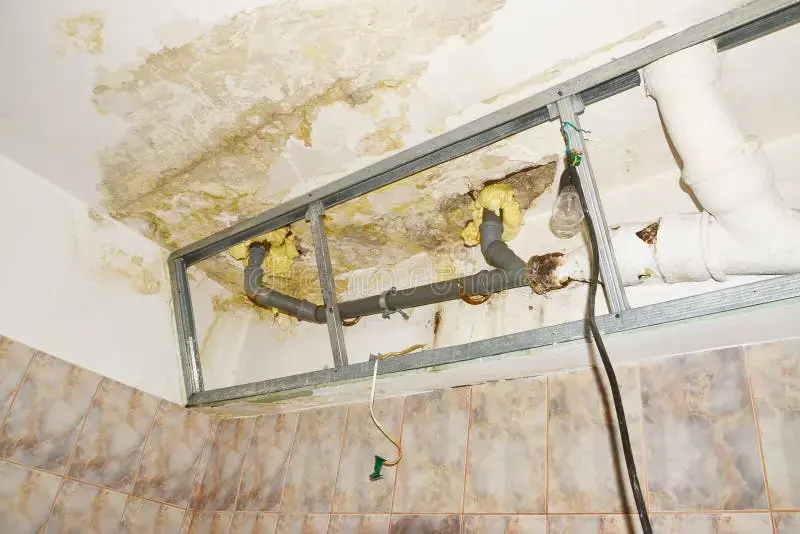
A stain that spreads, a bulge that sags, a drip from a light fixture: the water is coming from the floor above. The restoration team finds the source, drains the ceiling safely and dries the joist space.
(888) 535-8182Call about the Columbia ceiling leak- Thermal imaging above the drywall
- Safe drain holes
- IICRC S500 drying standard
What to do the moment you find a leaking ceiling
- Step 1Turn off the fixture above
Stop using the tub, shower or toilet over the stain, and close its supply valve if it is leaking.
- Step 2Cut power to that ceiling
Switch off the breaker for lights or fans in a wet ceiling.
- Step 3Stay out from under a bulge
A sagging ceiling can hold a lot of water. Keep people and pets clear and set a bucket to the side.
- Step 4Photograph the stain
Take photos of the ceiling and the room above before anything changes.
In Columbia's two-story colonials, split-levels and townhomes, bathrooms sit right over the kitchen, the family room or the front hall. A leak in the floor above lands in a finished room below, often a few feet from the actual source.
What does ceiling leak water damage cost in Columbia, MD?
In Columbia, MD, ceiling leak water damage typically runs $800 to $2,500 for a small ceiling area dried in place and $2,500 to $6,500 when drywall has to come down and the water reached walls and floors below. Water category, square footage, material class and how fast drying started drive the range.
- Clean water from a supply line
- Small access holes
- Joist cavity drying
- Drywall drained and removed
- Insulation pulled where wet
- Walls below dried
- Category 2 or 3 water
- Porous materials removed
- Antimicrobial and drying
The drivers are the water category, the square footage, the material class and how fast drying started. For a planning range, try the water damage cost calculator.
How ceiling leak drying is handled in Columbia
- 1
Find the source
The tech who does the walkthrough checks the fixtures above and uses thermal imaging to see how far the water spread in the joist space.
- 2
Drain and protect
The mitigation team drains pooled water through small holes and protects the room below.
- 3
Open what the readings require
Wet drywall that sags or holds dirty water comes down; damp drywall is dried in place.
- 4
Dry and verify
The drying team dries the joist cavity and logs readings until they match a dry reference.
The standard behind ceiling leak drying
Category 1 from supply lines, 2 or 3 from drains and toilets
Class 2 when drywall and insulation are wet
Thermal imaging, cavity drying, LGR dehumidifiers
Joists and drywall within 2 to 4 points of a dry reference
Common sources above the ceiling
- Failed grout or caulk around a tub or shower pan.
- A toilet wax ring leaking at the flange.
- A supply line or shutoff valve under a vanity.
- A drain line joint that opened up.
- An upstairs washer, water heater or HVAC condensate line.
Roof and attic leaks are a different job, covered on the roof leak water damage page. When the leak comes from a neighbor's unit, see townhouse and condo water damage.
Why ceilings are dried, not just painted
Water runs along the joists and settles on the back of the drywall and in the insulation. Paint over a stain before the cavity is dry and the stain comes back, or worse, mold grows where nobody can see it. The drying team uses thermal imaging to map the wet area, drills small holes to release pooled water and directs air into the joist space until the readings match a dry reference.
When the ceiling has to come down
Drywall that sags, crumbles or holds Category 2 or 3 water from a drain or toilet comes down. The EPA guidance on cleanup after water damage explains why porous materials touched by dirty water are removed, and the EPA mold cleanup page covers why drying fast within the first day or two matters.
Related water damage services in Columbia
Columbia and Howard County
The Columbia restoration crew covers all ten Columbia villages, from Wilde Lake and Town Center to Long Reach, Owen Brown, Kings Contrivance and River Hill, with Ellicott City, Elkridge, Clarksville and Fulton close by.
Every village and ZIP coveredCeiling leak water damage questions in Columbia
Is a water stain on the ceiling an emergency?
A growing stain, a bulge or a drip is. Turn off the fixture above, cut power to lights in that ceiling and keep people out from under any sagging area.
Can I poke a hole to drain a bulging ceiling?
A small hole at the lowest point of a bulge with a bucket underneath can release water safely, but stand to the side and keep power off. If the ceiling is sagging badly, stay clear and let the crew handle it.
Will the ceiling drywall be replaced?
Only if it sags, crumbles or was soaked with dirty water. Damp drywall from clean water is often dried in place.
How long does a ceiling take to dry?
A small area usually dries in three to five days with directed air into the joist cavity. Plaster ceilings and heavy insulation take longer.
Is a ceiling leak covered by insurance?
Sudden leaks from plumbing are commonly covered, while slow leaks and failed caulk often are not. Coverage depends on your policy, so it is worth checking with your own insurer.
Why did the stain come back after painting?
The cavity above was still wet, so moisture kept carrying stain through the new paint. Drying to a verified reading first prevents that.
Stain spreading or a ceiling dripping in Columbia?
(888) 535-8182Call about the ceiling leakCeiling dripping in your Columbia home? Call now.
The restoration team finds the source above, drains the ceiling safely and dries the joist space to a verified reading.