Washer & Appliance Leak Cleanup in Columbia, MD
Washer hoses, dishwasher connections and ice maker lines fail while nobody is watching. The restoration team extracts the water, pulls the kick plates and dries under the cabinets and floors.
(888) 535-8182Call about the Columbia appliance leak- Under-cabinet drying
- Moisture mapping
- Claim-ready photo log
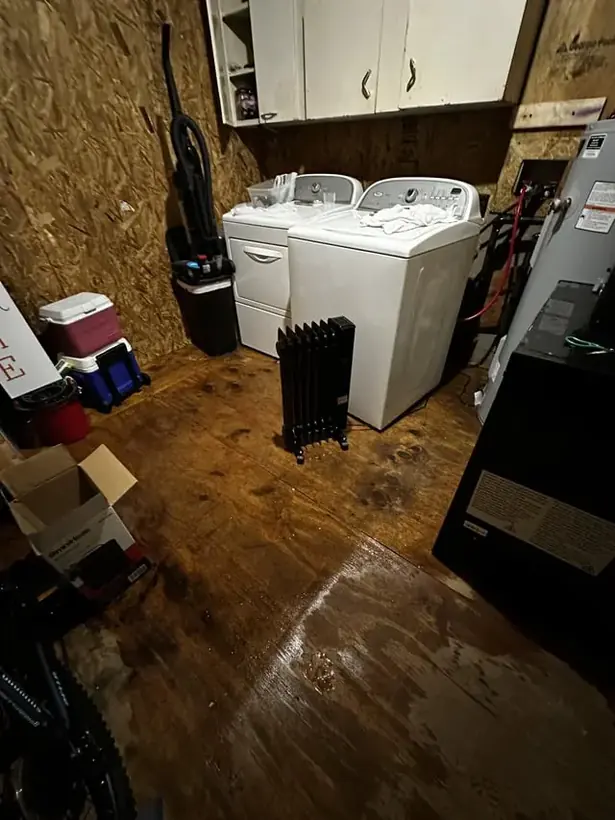
What to do the moment you find an appliance leak
- Step 1Close the appliance valve
Washer valves sit behind the machine, and dishwasher and ice maker valves usually sit under the sink.
- Step 2Unplug if it is safe
Only when the outlet and floor around it are dry.
- Step 3Pull out what you can
Empty the sink base and lower cabinets so wet contents do not sit against wood.
- Step 4Photograph the connection
Take photos of the failed hose, fitting or valve before it is replaced.
Appliance leaks are among the most common water losses in Columbia homes and townhomes. Laundry rooms sit on the main floor, the upper floor or in the finished basement, and kitchens are packed with water connections tucked behind cabinets.
What does washer & appliance leak cleanup cost in Columbia, MD?
In Columbia, MD, appliance leak cleanup typically runs $800 to $2,500 when the water stays in the laundry room or kitchen and $2,500 to $6,500 when it runs under cabinets, into the subfloor or through the ceiling below. Water category, square footage, material class and how fast drying started drive the cost.
- Laundry room or kitchen floor
- Extraction and floor drying
- Kick plates pulled
- Cabinet cavity drying
- Laminate or vinyl lifted
- Subfloor readings logged
- Water through the ceiling below
- Two levels dried
- Access cuts where readings show
The drivers are the water category, the square footage, the material class and how fast drying started. For a planning range, try the water damage cost calculator.
How appliance leak cleanup is handled in Columbia
- 1
Map the spread
The tech who does the walkthrough maps moisture under the appliance, the cabinets and the flooring.
- 2
Extract
The extraction crew removes standing water and pulls what it can from the flooring and subfloor.
- 3
Open the hidden spaces
The mitigation team removes toe kicks and, where needed, lifts floating floors to reach trapped water.
- 4
Dry and verify
The drying team uses cavity drying tools and LGR dehumidifiers and logs readings until dry.
The standard behind appliance leak cleanup
Category 1 from supply hoses, Category 2 from drains
Class 2 when cabinets and subfloor are wet
Extraction, cavity drying, LGR dehumidifiers, meters
Subfloor and cabinet bases within 2 to 4 points of dry
The usual suspects
- Rubber washer fill hoses that split with age.
- Washer drain hoses that slip out of the standpipe.
- Dishwasher supply connections and door seals.
- Plastic ice maker and water filter tubing behind the refrigerator.
- Sink supply lines and garbage disposal connections.
The EPA WaterSense leak checks include simple ways to spot failing connections, and Ready.gov covers electrical safety around standing water.
Why kitchens hide water
Water that runs under a dishwasher or refrigerator flows beneath the cabinet bases and the toe kicks. From above the floor looks almost dry, but the subfloor and the cabinet bottoms stay wet. The drying team removes the toe kicks, drills small vent holes where needed and pushes dry air through the cabinet cavities. Laminate and luxury vinyl plank floors often trap water underneath and may need to be lifted.
Clean supply water or dirty drain water
Water from a supply hose is Category 1. Water from a washer drain or a dishwasher mid-cycle carries soap, food and lint and is treated as Category 2, which changes how carpet and pad are handled. When a second-floor laundry leaks, the job becomes a ceiling leak too. Water heaters are covered under water heater leak cleanup.
Related water damage services in Columbia
Columbia and Howard County
The Columbia restoration crew covers all ten Columbia villages, from Wilde Lake and Town Center to Long Reach, Owen Brown, Kings Contrivance and River Hill, with Ellicott City, Elkridge, Clarksville and Fulton close by.
Every village and ZIP coveredWasher and appliance leak questions in Columbia
What should I do first when the washer floods?
Close the washer valves behind the machine, unplug it only if the floor around the outlet is dry, and photograph the failed hose. Then get extraction started so water does not sit under cabinets or flooring.
Do kitchen cabinets have to be replaced after a leak?
Often not. Cabinets can usually be dried by removing the toe kicks and pushing air through the base. Particleboard that swelled or delaminated may need replacement.
Can laminate or vinyl plank floors be dried in place?
Water trapped under floating floors often stays wet. The mitigation team reads under the floor and lifts sections when readings show trapped water.
Is an appliance leak covered by insurance?
Sudden water damage from a burst hose is commonly covered, while the appliance itself and long-term leaks usually are not. Coverage depends on your policy, so it is worth checking with your own insurer.
How long does drying take after a washer leak?
A contained loss usually dries in three to five days after extraction. Cabinets and subfloor under hard flooring can take longer.
How can I prevent the next appliance leak?
Replace rubber washer hoses with braided stainless hoses, check dishwasher and ice maker connections yearly, and add leak alarms under the washer and sink.
Washer or dishwasher water on a Columbia floor?
(888) 535-8182Call about the appliance leakAppliance leak in your Columbia home? Call now.
The restoration team extracts the water, opens the hidden spaces under cabinets and floors, and dries to a verified reading.